Master Business Meeting English: 7 Essential Tips
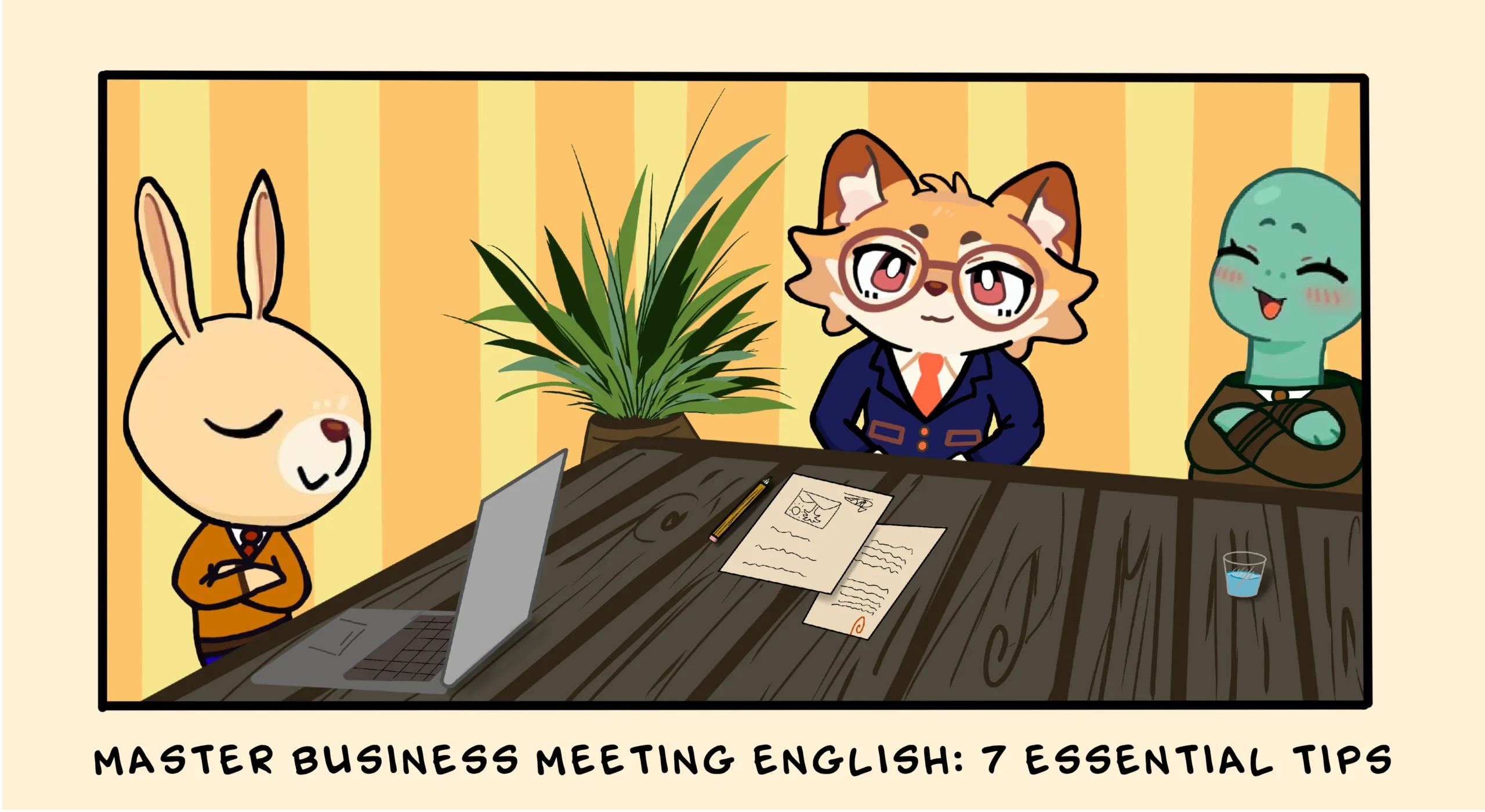
For non-native speakers, attending a meeting in English can feel intimidating. Whether in person or over Zoom, the professional context adds pressure — particularly when native speakers talk quickly, use specific vocabulary, or ask complicated questions.
Business meetings require a different set of communication skills than simply “knowing English”. In previous meetings, you may have asked yourself questions like:
- When is the right time to speak up?
- How do I ask a question if I don’t understand the speaker?
- What are the right words to use in this professional setting?
Navigating business meetings can be tricky in other languages, as it involves a range of skills that go beyond vocabulary. You might need to know how to open a meeting, interrupt politely, or summarize a point. You may even need to buy yourself time to think, or find a diplomatic way to disagree with another person’s point of view.
For more information on why Business English is important in today’s world, check out this article: The Importance of Learning Business English in Today’s Globalized World
In this guide, we will walk you through 7 practical steps that will make your next business meeting feel much less scary, and boost your confidence in professional settings.
Table of Contents
You do not need to be perfectly fluent to express yourself in a meeting – you just need to master the right strategy.
Rather than memorizing long lists of vocabulary from the dictionary, this guide will help you prepare specific “power phrases” and tools so that when you walk into your next conference room (or Zoom call) you feel ready.
We will discuss ways to prepare efficiently, build a rapport with others, set the agenda, practise active listening, and walk away from the meeting knowing exactly where you stand and what to do next.
1. Review the Agenda in Advance
One of the best ways to ensure a business meeting is successful is to come prepared.
Try asking the organizer for the agenda beforehand. If there is no agenda, ask a simple question via email: “Could you please share the main points we will cover today?”
If you know what topics will be covered, you can familiarize yourself with relevant vocabulary in advance. This will make it easier to use the terms and recognise when others do. Take 15 minutes to brainstorm, write down any useful words or ideas about each topic, and a couple of questions that you can ask during the meeting.
For example, if the meeting is about a new product, you could prepare some specific vocabulary such as: “target market” “competitive advantage” “customer feedback”; and have some questions prepared such as: “what are the key features of the new product?”
When the meeting starts, you will already have a set of notes to fall back on. This is helpful if your mind goes blank or you struggle to think of something to say. Instead of trying to translate all the new ideas in the moment, your notes page acts as a cheat sheet.
2. Master the Art of Small Talk
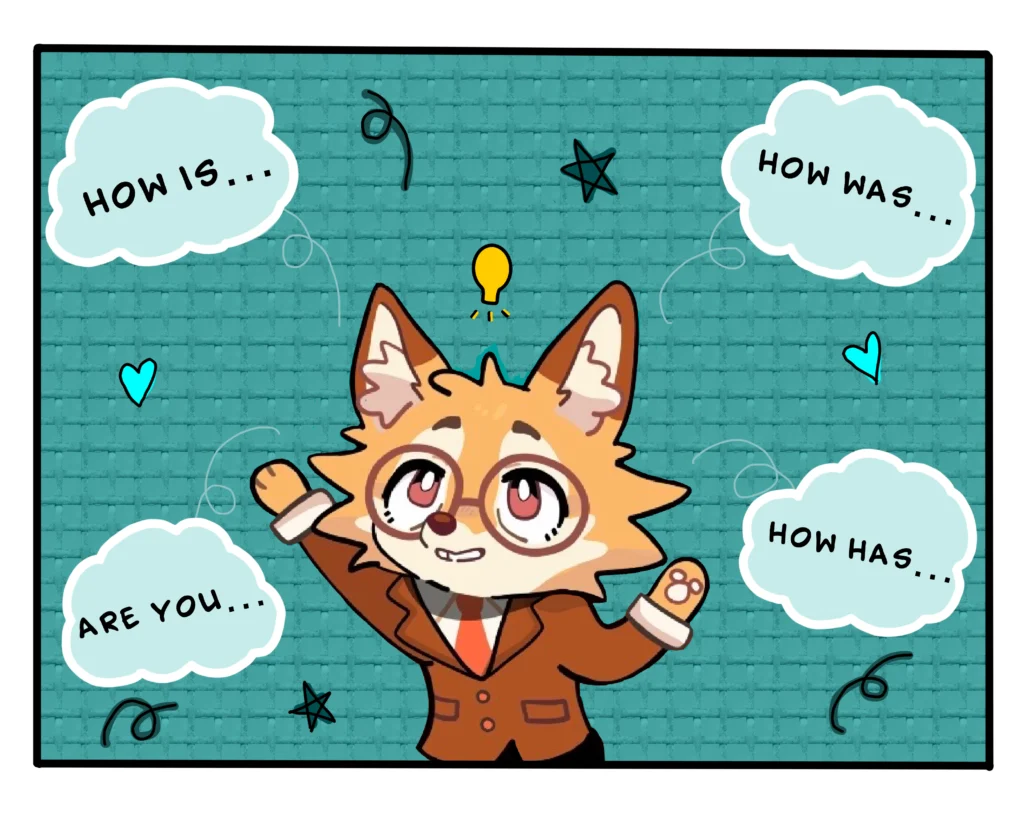
In many English-speaking cultures, especially in the US and the UK, diving straight into business conversations may be perceived as rude. Meetings often begin with a couple of minutes of informal conversations called “small talk”. These moments are a good opportunity to build rapport with colleagues or clients.
This is your chance to warm up your English brain before the hard work begins. Keep topics light: weather, weekends, or travel.
Common Small Talk Topics and Example Conversations
| Context | Typical Conversation |
| The Weekend | “How was your weekend? Did you do anything fun?”“It was really nice thank you, my parents came to visit, and we went to an exhibition”“That sounds lovely!”“What about you? How was your weekend”“It was very relaxing, thank you. I’d had a busy week and so I just stayed at home with the dogs.” |
| The Weather | “How is the weather over there? It’s pouring with rain here.”“Yes, it’s been the same over here. Summer can’t come quick enough.” |
| Travel/Location | “Are you calling in from the New York office today?”“I am. I’ve been here for a couple of weeks and it’s always lovely. Have you ever been?”“No I haven’t actually, but it’s definitely on my bucket list of places to go.” |
| General Check-in | “How has your week been so far?”“Oh you know, work as usual, but I’m glad it’s almost Friday! What about you?”“Same here really, but luckily we had a bit of sunshine this week, that always makes the days go quicker.” |
It is very likely that your conversation partner will ask the same questions to you, so be prepared to answer them! Remember, keep this part of the conversation light-hearted and enthusiastic. Don’t ask anything too personal.
3. Learn Essential Phrases
To sound professional, you need a toolkit of functional language; phrases that will help you during a business meeting. These will act like road signs — informing everyone where the conversation is going, and helping you feel confident steering it.
With a couple of these phrases under your belt you will be able to give your opinions in a nuanced way, redirect the focus, ask for clarification, and summarise key points. All of these are essential skills to achieve professionalism in workplace communication.
Below are some examples of how to direct the meetings, and express opinions.
Opening and Managing the Meeting
| Goal | Phrase |
| Starting the meeting | “Thanks everyone for joining us today. Let’s get started.”“Shall we make a start?” |
| Stating the objective | “The main goal of this meeting is to decide on…”“What we’d like to achieve today is…” |
| Moving between agenda items | “First on the agenda is the marketing budget.”“The next thing we need to discuss is…” |
| Managing the discussion/ keeping things focused | “I think we’re starting to move away from the main issue…”“Let’s put that aside for a moment and focus on…” |
| Handing over to someone | “I’d like to hand it over to Sarah to discuss the sales figures.”“I’ll let Andrew take it from here” |
| Keeping time | “We are running short on time, so let’s move on.”“I’m conscious of the time, so …” |
Opinions, Agreement, and Suggestions
| Goal | Phrase |
| Giving an opinion | “From my perspective, we should focus on quality.”“One thing we should consider is” |
| Adding to someone else’s point | “I’d just like to build on that.”“Following on from what Lucy said…” |
| Agreeing strongly | “I couldn’t agree more.”“I’d be inclined to agree with Greg on this point, because…” |
| Agreeing partially | “I see your point, but we also need to consider the cost.”“I wonder if there may be another way we could approach this.” |
| Disagreeing politely | “I’m afraid I disagree. I think that might be too risky.”“I see what you mean, although…” |
| Asking for opinions | “What are your thoughts on this, John?” |
| Suggesting an idea | “Have we considered…”“One option might be to…” |
| Buying yourself time to think | “Off the top of my head…”“Let me come back to you on that.” |
4. Don’t Be Afraid to Ask for Clarification
One of the biggest fears for learners of business meeting English is getting lost in the conversation. Someone speaks too fast, uses a strange idiom, or the audio connection is poor.
The important thing is not to stay silent! Nodding when you don’t understand is dangerous, as it can lead to miscommunication and mistakes later down the line. Native speakers ask for clarification all the time. It is a sign of active listening, not weakness.
Use these phrases to interrupt politely and get the information you missed:
- “I’m sorry, I didn’t catch that. Could you repeat it?”
- “Could you please speak a little slower?”
- “Just to make sure I understand, are you saying that…?”
- “Could you clarify what you mean by ‘streamline’?”
Useful tip: Try paraphrasing what somebody has just said to check your understanding.
5. Active Listening Techniques
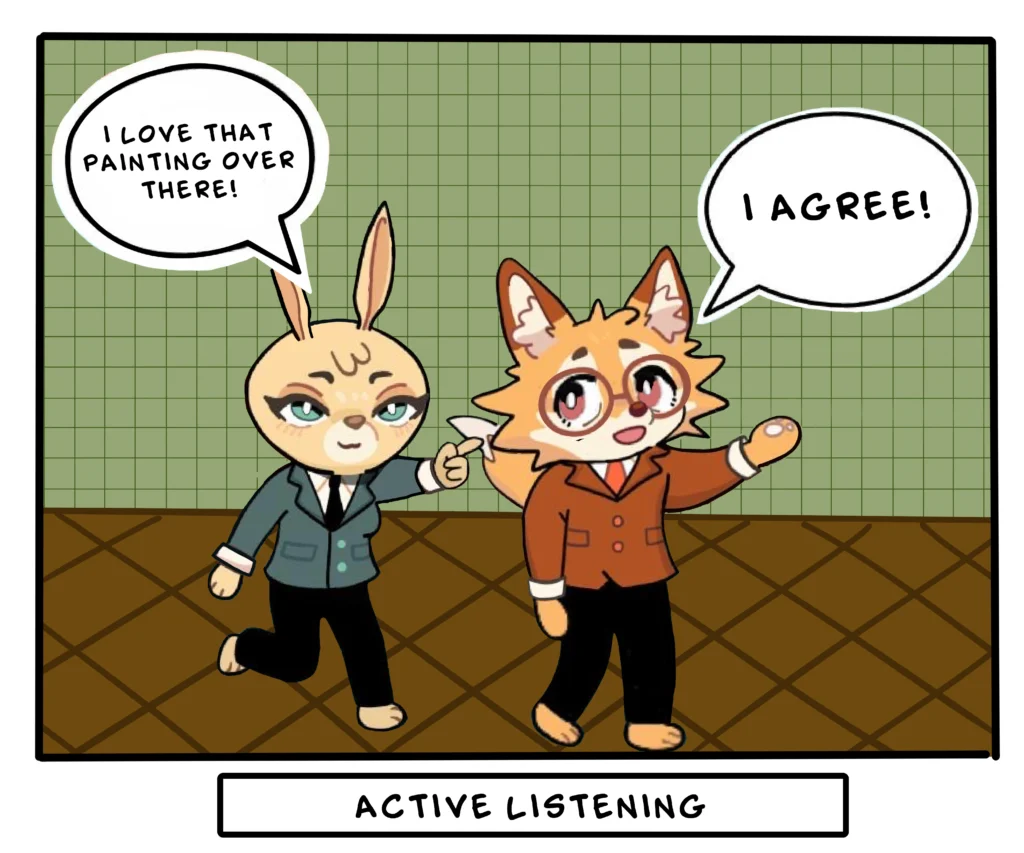
In business meetings, you will not be speaking 100% of the time. In fact, you will likely spend most of the meeting listening. But listening should not be passive.
Active listening can be done in many ways, not only to show engagement, but also to make sure you are taking in the information in front of you. Some tips to improve active listening:
- Take notes while others are speaking to remember key points.
- Ask follow-up questions.
- Briefly summarise/paraphrase what someone has said.
- Show engagement through short agreeable phrases such as “Right,” “I see,” or “That makes sense”.
- In face-to-face meetings, use eye contact and nodding to demonstrate that you are listening.
This creates a positive atmosphere and shows the other speakers that you are paying attention. When you do finally speak, people will be more likely to listen to you attentively. It will also help you understand the content of the meeting, and make your own contributions more valuable.
6. Interrupting and Taking the Floor
In lively discussions, it can be hard to find a gap to speak. If you wait for total silence, you might never get a turn.
Part of mastering business meeting English is learning how to interrupt without being rude. You need to be firm but polite. Using the right phrase acts as a signal that you want to contribute.
Maybe someone has gone totally off topic and you’d like to steer it back to the agenda. Or perhaps you have a really good idea that you’d like to put forward before the conversation moves into a different direction.
Below are some phrases that you can use in different scenarios that will help you interject when necessary.
| Context | Phrase |
| Jumping in | “Can I come in here for a second?” |
| Adding a point | “I’d like to add something to that.” |
| Stopping a digression | “Sorry to interrupt, but can we get back to the main point?” |
| Getting attention | “May I say something quickly?” |
Remember to be aware of how direct your interjection is. It may be useful to say “Sorry” or “May I” before saying your point to avoid sounding rude.
If you need to give a presentation in the meeting, you can find some useful phrases here: Essential Phrases for Business Presentations in English
7. Summarize and Confirm Next Steps
A great meeting can be ruined if no one knows what to do afterward. The end of the meeting is the most critical time to use clear business meeting English. This will ensure that you know what you should be focusing on next, confirming responsibilities, and checking what everyone has agreed.
Before you hang up or leave the room, summarize the main decisions, or take notes if somebody else does the summary. This ensures everyone is on the same page and prevents misunderstandings.
- “To wrap up, we have decided to…”
- “Let’s just go over the action items quickly.”
- “So, John will handle the report, and I will contact the client. Is that correct?”
- “I just wanted to double check that what we have decided is…”
If you are still not clear after the meeting, consider writing a follow-up email with your notes to double check that you have understood everything.
Conclusion
Improving your business meeting English is a journey. It requires preparation, a good vocabulary list, and the courage to speak up. Don’t worry, you do not need to have perfect fluency to excel in the English business world. At the end of the day, meetings are about communicating ideas rather than demonstrating perfect grammar.
If you actively listen to others and put forward your ideas, business meeting English will become second nature! The important thing is to challenge yourself. Try actively participating in your next meeting, it will only get easier with practice.
Why not pick one phrase from each of the tables above, learn them, and try to incorporate them in your next business meeting? Follow the steps above, prepare some notes with key phrases and vocabulary and most importantly, be confident in your ideas.
You do not need to know exactly what to say, and it is okay if you do not understand someone. Asking for clarification is not a weakness; it shows genuine interest and a desire to learn.
By following these tips, you will transform from a nervous listener into an active, confident participant. You now have all the skills you need; go show them off!
Writer: Lisa Richardson
Designer: Isha Barua